


I have used Speed Post for everything from sending PAN card forms to dispatching wedding invites to tier 3 cities. I have also shipped hundreds of e-commerce parcels through private couriers. They are not the same product, and you cannot judge them by the same yardstick. But people keep doing it, and then end up either disappointed or surprised. So here is a side-by-side look at how the two compare specifically when it comes to tracking, because that is the part that decides whether your stress level stays low or spikes through the roof.
What Speed Post Actually Is (And Why People Still Use It)
Speed Post is India Post's premium delivery service, and it has been around since 1986. For a lot of people, especially in tier 2 and tier 3 cities, the post office is still the default place to ship something. There is a branch within walking distance, the rates are reasonable, and unlike most private couriers, Speed Post serves nearly every PIN code in the country including remote villages where private players either do not deliver or charge ridiculous surcharges.
That last point is the real reason it has stayed relevant. You can post a packet from a small town in Rajasthan to a hill station in Himachal, and Speed Post will get it there. Maybe not in two days, but it will get there. That kind of reach is something even the biggest private players struggle to match outside the metros.
The Speed Post Tracking Number (And Where to Find It)
Every Speed Post shipment gets a 13-character tracking number — usually starting with the letter E, like EE123456789IN. You will find it printed on the small receipt the post office hands you after weighing the parcel. Hold on to that piece of paper. If you lose it, recovering the number is a real hassle. The post office can technically help, but only if you remember the exact day, the destination address, and ideally the weight.
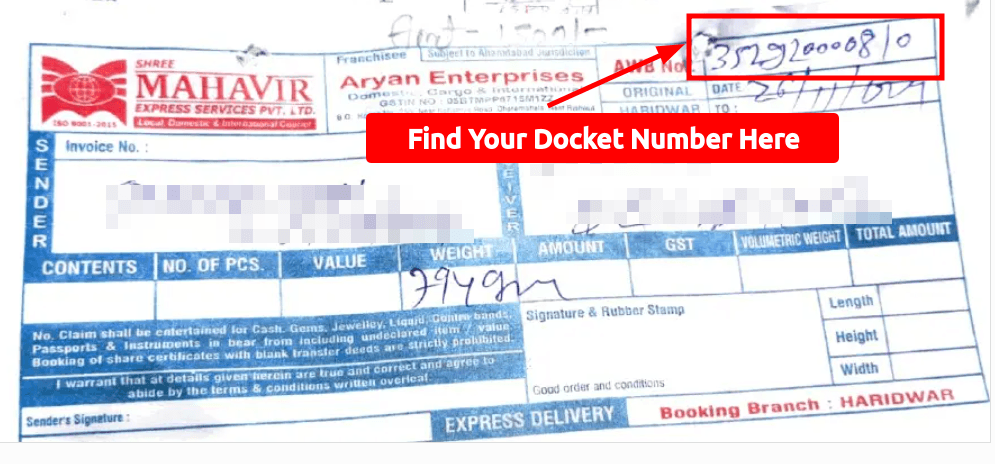
Tracking the package itself is simple in theory: go to the India Post tracking page, paste the number, hit search. In practice, the website has its own moods. Some days it loads instantly. Other days it just refuses. If you are juggling Speed Post alongside other couriers, a unified tool like Mahavir Courier Tracking can save you the hassle of opening different sites for each shipment. You drop in any number and it figures out the courier on its own. Worth bookmarking if you ship even a couple of times a month.
How the Tracking Actually Works
Speed Post tracking is scan-based, just like every other courier. The package gets scanned at booking, at the originating sorting hub, in transit hubs along the way, at the destination office, and finally at delivery. The catch is that India Post's network has fewer scan points than most private couriers. So you might book a package on Monday, see the Booked status, and then nothing for two or three days. Then suddenly it shows up at the destination post office.
This radio silence in the middle is by far the most common Speed Post complaint. The package is moving — it is just not getting scanned at every station the way Blue Dart or Delhivery would scan it. If you are a first-time user, that gap can feel like the package has vanished. It usually has not.
Where Speed Post Tracking Falls Short
Three things consistently bother people. First, no SMS or email updates by default. You have to actively go and check. Second, the tracking page rarely tells you which delivery person is handling your shipment or when to expect it. You will see Out for Delivery with no time window. Third, once it shows Delivered, good luck challenging that. There is no proof of delivery photo, no signature image, nothing. If something goes wrong, your only recourse is filing a complaint at the local post office, which can take a week to even get a response.
Speed Post vs Private Couriers — Quick Differences
- Coverage: Speed Post wins easily, especially for rural and remote PIN codes.
- Tracking detail: Private couriers usually win — more scan points and faster updates.
- SMS notifications: Most private couriers send these by default; Speed Post does not.
- Delivery proof: Private couriers often share a photo or OTP; Speed Post does not.
- Pricing: Speed Post tends to be cheaper for lighter parcels and shorter routes.
- Customer support: Private couriers have apps and chat; post offices are walk-in only.
When Speed Post Is the Right Choice
Speed Post still makes sense for documents going to remote PIN codes, government-related dispatches, and any time you genuinely do not need minute-by-minute tracking. For a parcel going from Surat to a village in Bihar, Speed Post is often the only realistic option that will not cost three times the value of the item itself. For ordinary day-to-day e-commerce shipments, though, private couriers are usually the better experience. If you are juggling a mix of both — and most of us are — keeping a single dashboard like Mahavir Courier Tracking open alongside the official courier sites makes the daily checking a lot less annoying.
If you are completely new to tracking and not sure where to even start, the complete beginners guide to courier tracking walks through the absolute basics — what each part of a tracking number means, where to find it, and how to read the timeline. Worth a read if any of this still feels confusing.
Honestly, neither system is perfect. Speed Post is reliable in places nobody else reaches, but the tracking experience has not really evolved in a decade. Private couriers offer better visibility but charge for it and often ignore half the country's smaller towns. The trick is picking the right tool for the right shipment, and not assuming the cheaper option is always the better one. A two-rupee saving does not help if you spend three days wondering where your parcel is.