Mahavir Courier Blog

Shipping Smarter Starts
With the Right Knowledge

Real-world courier tips, in-depth shipping guides, and logistics insights written by people who track thousands of shipments every week. No recycled advice only what actually works.

7 In-Depth Articles
5 Topic Categories
4,000+ PIN Codes Covered
500+ Branches Nationwide

Why we started writing about courier shipping

The shipping world has become more complex than most people realise. A simple parcel moving from Ahmedabad to Bangalore passes through five or six different hands, two or three sorting hubs, several status systems, and at least one mobile data scan before it reaches a doorstep. When something goes wrong a delayed delivery, a missing package, a confusing status update, or a suspicious SMS most people have no idea where to look or who to ask. That gap between what couriers do and what customers can see is exactly why we publish this blog.

We are the team behind Mahavir Courier Tracking, a free status portal used every week by thousands of online shoppers, small business owners, and ecommerce sellers across India. We see the same questions repeat in our inbox: What does "shipment in transit" actually mean? Why has my package shown the same status for three days? Is this delivery SMS real or a phishing scam? Can the address be changed after a docket has been booked? Behind every article on this blog is a real conversation we have had with a real user and the answer we wish we could have given them all in one place.

Our goal is straightforward. We want anyone who interacts with a courier service whether you ship one parcel a year or a thousand a day to leave this blog with a clearer head and a smaller list of unanswered questions. We do not chase trending topics. We do not republish what other websites already say. Each guide is built from our own support tickets, the patterns we notice in the tracking data, and the conversations we have with branch staff, hub coordinators, and delivery executives who run the network on the ground.

Browse by Topic

All Articles E-commerce LogisticsCyber Security & LogisticsCourier TipsBusiness GuideLogistics Technology

Where to start, based on why you are here

Most people who land on this blog are not casually browsing. They have a parcel they cannot see, a shipping decision they cannot make, or a message in their inbox that does not feel right. Pick the description below that fits you best — each path is a short reading order built from how our readers actually move through these guides.

Path 2

You run a small business or ship for an online store

You handle five, fifty, or five hundred shipments a month and the wrong courier choice is quietly eating into your margins. These three guides cover the decisions that matter most before you scale further.

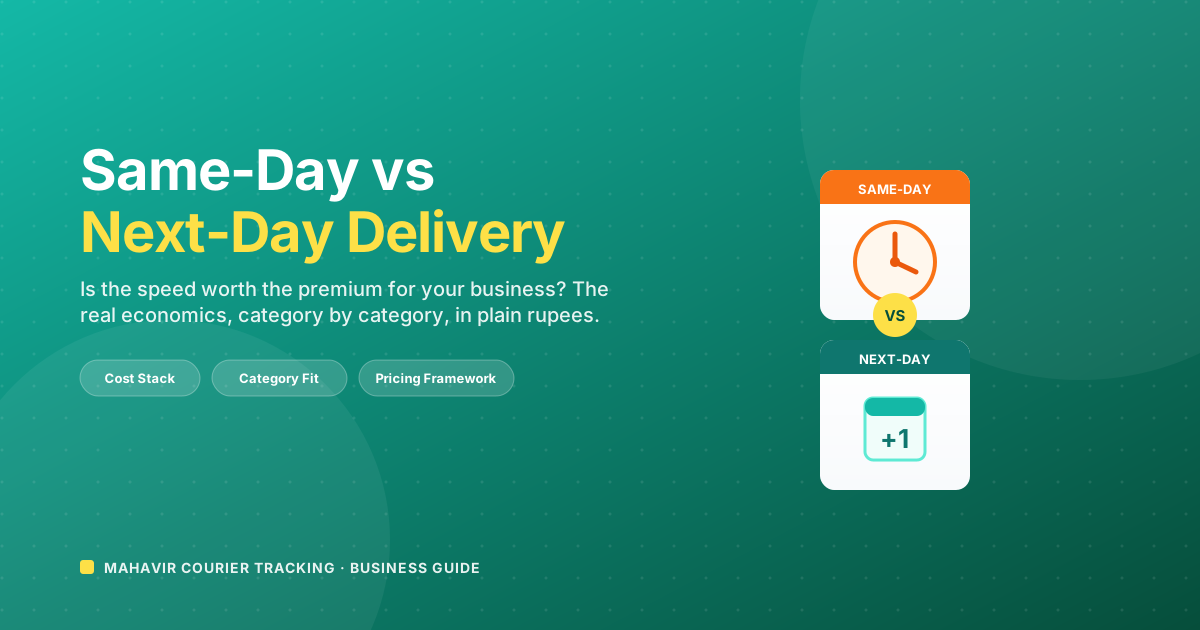
  1. Choose the Right Courier Partner for Small Business Business Guide · 9 mins
  2. Scaling to 10x Orders: Real-Time vs Batch Tracking Guide E-commerce Logistics · 18 mins
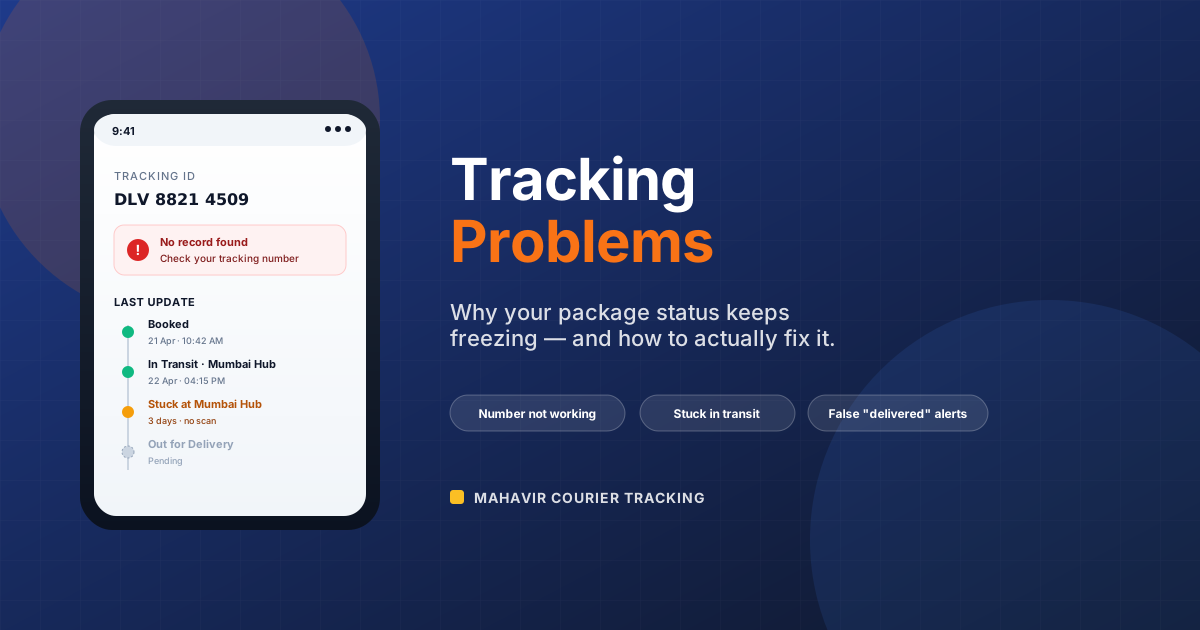
  3. Common Courier Tracking Problems and How to Fix Them Courier Tips · 8 mins
Path 3

You are comparing courier services or curious about the industry

You want to understand how Indian courier networks actually move parcels and how the public Speed Post system stacks up against private players. Start with the comparison piece, then go deeper.

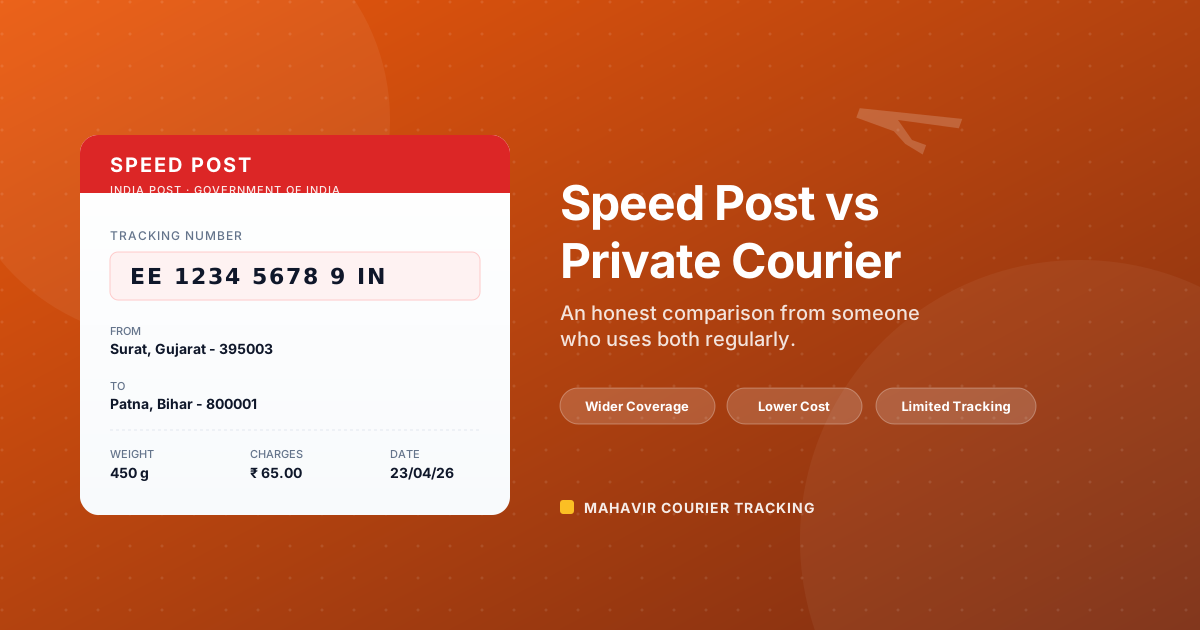
  1. Speed Post and Courier Tracking: An Honest Comparison Courier Tips · 7 mins
  2. Scaling to 10x Orders: Real-Time vs Batch Tracking Guide E-commerce Logistics · 18 mins
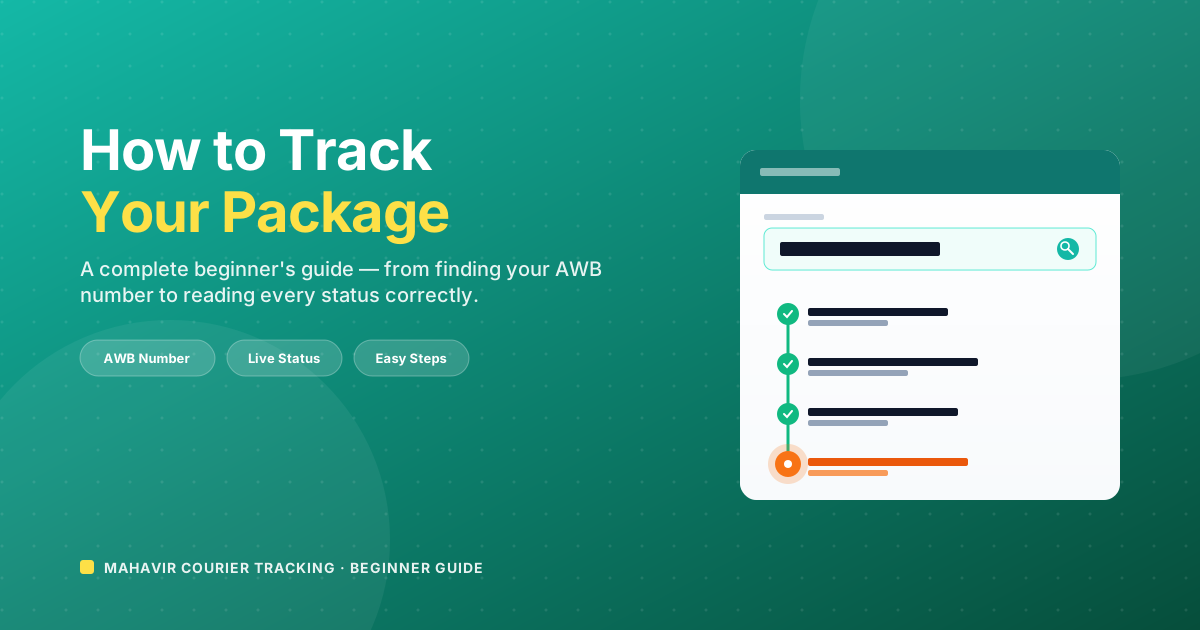
  3. How to Track Your Courier Package — Beginner's Guide Courier Tips · 8 mins

Need to Track a Package Right Now?

Skip the reading and head straight to our tracking tool. Enter your AWB or docket number and get real-time updates on your Mahavir Courier shipment in seconds.

Track Your Shipment

What You Will Find on This Blog

Every article is written with a specific reader in mind hether you are a first-time online shopper confused about tracking, a small business owner choosing between courier partners, or someone who just wants to understand how the shipping world works behind the scenes.

📦

Courier & Tracking Tips

Step-by-step guides that walk you through tracking your shipment, understanding AWB numbers, reading status updates, and handling delivery issues all in plain language.

💼

Small Business Shipping

Practical advice for business owners on choosing the right courier partner, managing COD remittances, optimizing packaging, and building a logistics setup that actually scales.

🔒

Scam Alerts & Safety

Detailed breakdowns of the latest delivery scams, phishing SMS patterns, and spoofed tracking pages with clear steps to protect yourself and your personal data.

🚀

Logistics & Industry Trends

Deep dives into how the courier industry is evolving from real-time tracking technology and last-mile delivery challenges to the future of shipping in tier 2 and tier 3 cities across India.

Common courier questions, answered plainly

These are the questions we hear most often from people using our tracking portal. If you are new to shipping in India or just want a refresher, start here before diving into the longer guides.

What exactly is an AWB number and where do I find mine?

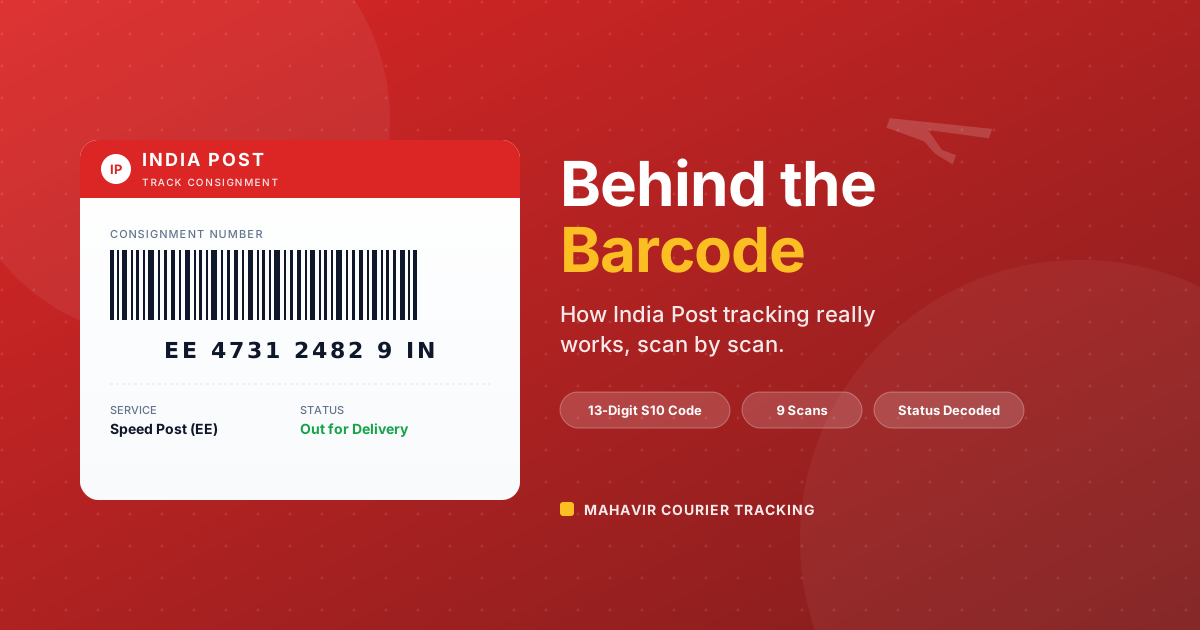
AWB stands for Air Waybill, but in the Indian courier world the same identifier is also called a docket number, consignment number, or tracking ID depending on which company you ship with. It is a unique string of digits sometimes mixed with letters that the courier prints on a sticker pasted on your parcel. You will also find it on the printed receipt handed to the sender at booking, on any SMS sent to the recipient, and in the order confirmation email if your parcel was booked through an ecommerce platform. Without this number, no courier portal can show you live status, so the very first thing to do when you book or receive a shipment is to save it somewhere you will not lose it.

Why has my tracking page shown the same status for two or three days?

A static status almost always means the parcel is physically in motion between two scan points. Couriers do not scan a package every kilometre they scan it when it leaves a hub, when it arrives at the next hub, when it is loaded onto a delivery vehicle, and when it is finally handed over. Long-haul road movements between states for example, Gujarat to Tamil Nadu can easily take 36 to 48 hours during which no new scan event is generated. If the gap stretches beyond four working days without any update, that is when it is worth raising a query with the booking branch.

What is the difference between "in transit" and "out for delivery"?

"In transit" is a broad status that covers everything between the moment a parcel leaves the origin branch and the moment it reaches the final delivery hub closest to the recipient. It can include road movement, sorting at intermediate hubs, and loading onto onward trucks. "Out for delivery" is much more specific. It means the parcel has been loaded onto a delivery vehicle that morning and is expected to be attempted at the address that same day. If you see "out for delivery", keep your phone reachable the delivery executive will usually call before arriving.

How long does a Mahavir Courier shipment take between Indian cities?

Transit time depends mostly on the distance between the origin and destination hubs, the day of the week the parcel was booked, and whether either end of the route is a metro or a smaller town. As a rough guide, intra-state shipments typically deliver within one to two working days, neighbouring-state shipments within two to four working days, and long-haul cross-country shipments within four to seven working days. Pickups made late on a Saturday almost always start moving only on Monday, so booking earlier in the week tends to deliver faster than booking on a weekend.

What happens if I am not at home when the courier arrives?

Most Indian courier networks, including Shree Mahavir Courier, attempt a delivery up to three times before sending the parcel back to the origin. After the first failed attempt, you will usually receive an SMS or a call from the local delivery executive. If you know in advance you will not be home, the simplest fix is to reply to that SMS or call the number it came from and either reschedule the visit for a specific day, give an alternate landmark, or authorise a neighbour or building security desk to receive the parcel on your behalf.

Can I change the delivery address after the parcel has been picked up?

It depends on how far the parcel has already moved. If the parcel is still at the booking branch or has not yet been manifested onto a long-haul vehicle, address changes are usually possible with a quick call to the booking office. Once the parcel has crossed into a different state or has been routed to a destination hub, in most cases the only options are to redirect it to the new address from the destination hub which adds time or to let it return to origin and rebook a fresh consignment. Always speak to the booking branch first they have the most direct view of where exactly the parcel is.

What does RTO mean and why was my parcel marked RTO?

RTO stands for Return to Origin. It is the status used when a parcel could not be delivered and is being sent back to the original sender. The most common triggers are three failed delivery attempts, the recipient refusing the parcel at the door, the recipient asking for a return because the contents were wrong, an incorrect or incomplete address that nobody could reach, or a customer not answering the phone for several days. If you are the seller, RTOs are worth tracking carefully because they directly affect your shipping cost and inventory cycle.

How do I tell if a delivery SMS or tracking link is genuine?

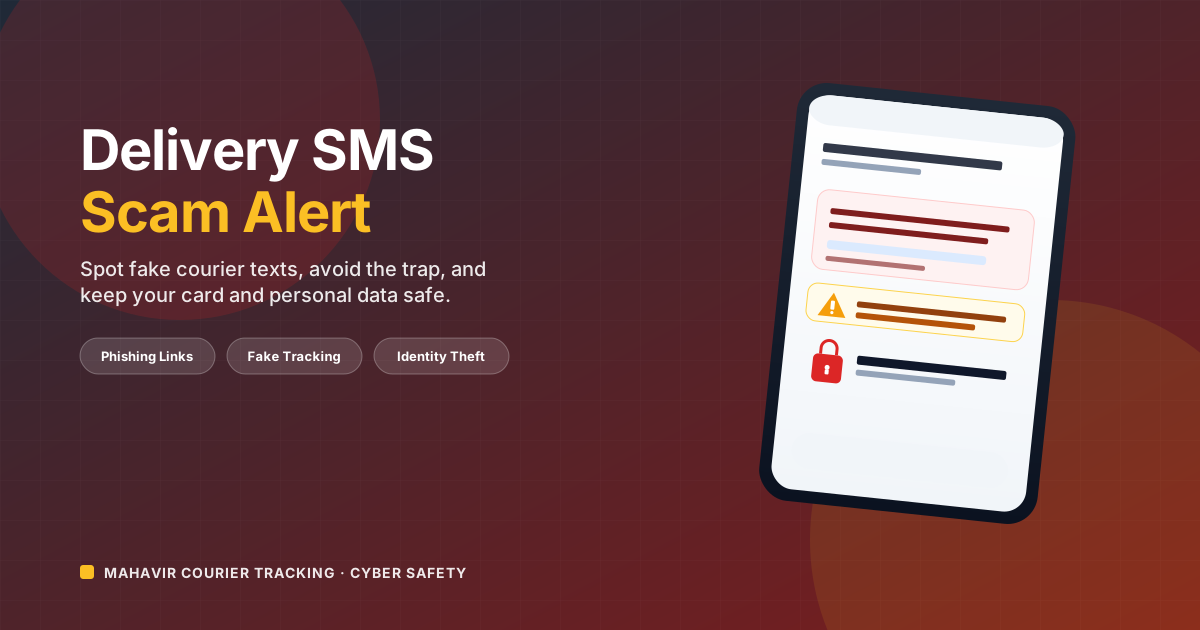
Real courier messages stick to facts your AWB number, a status update, sometimes the delivery executive's number. They almost never ask you to pay a small fee to release the parcel, click a shortened link to confirm address details, or share an OTP. If you receive a message that asks for any of those things, treat it as a scam. The safest habit is to ignore the link in the SMS, open the official courier website manually in your browser, type the AWB into the tracking box, and check the status there. We have written a separate detailed guide on courier-related phishing patterns linked from this blog under the Scam Alerts category.


What this blog is built on

Most courier advice on the internet is either copy-pasted from one site to the next or written by people who have never booked a parcel from a small-town branch on a Saturday evening. We try hard to be the opposite of that. The guides on this blog are pulled from four very specific sources of information, and we think it is fair to be upfront about each one.

  • Live tracking data. Our portal handles thousands of tracking look-ups every week across more than 4,000 Indian PIN codes. The patterns we notice — which routes consistently take an extra day, which weeks of the year flood the network, which hubs go quiet on certain holidays — feed directly into how we describe transit times and status delays.
  • Branch and hub conversations. Shree Mahavir Courier has been running since 2011 and operates over 500 branches across India. When a guide touches on something operational — pickup cut-offs, address standards, remittance cycles — we run the answer past someone who actually works inside a branch or sorting hub before publishing.
  • Reader and seller queries. Every week our contact form, email, and phone lines receive a steady stream of questions from online shoppers, ecommerce sellers, and small business owners. The article topics on this blog are decided directly by the questions that show up there most often.
  • Reported scams and suspicious messages. Our scam alert pieces are not built from press releases. They are built from screenshots and SMS forwards that real readers send us when something feels off — the spoofed tracking page, the fake "small fee" payment link, the OTP that should never have been asked for.

We are deliberate about what we will not write about. We do not publish thinly sourced "industry trends" pieces, we do not chase keyword opportunities just because the search volume is good, and we do not paraphrase Wikipedia or other blogs to fill space. If we cannot say something useful that is grounded in one of the four sources above, we leave the topic alone.

How we research and write each article

Every guide on this blog goes through the same process. We begin with a real question one we have been asked at least a dozen times by users of our tracking portal or by sellers who write in through our contact form. From there, we pull together everything we already know from years of running the platform: the tracking patterns we see in the data, the recurring complaints, the seasonal spikes, the regional differences in how parcels move through the network.

Where the question touches on something operational addressing standards, hub cut-off times, courier-specific transit windows we cross-check the answer with someone working inside the network. Sometimes that is a branch manager in Ahmedabad. Sometimes it is a hub coordinator in Mumbai or a long-haul driver who has run the same Bangalore-to-Hyderabad route for ten years. Their input keeps the blog grounded in how the courier business actually works on the ground rather than how it is described in a brochure.

Once a draft is ready, we read it back from the perspective of the person who first asked the question. If a sentence assumes industry knowledge we take for granted, we rewrite it. If a step is unclear, we add an example. If a screenshot or diagram would help, we include one. Only then does the article go live. Most of our guides are revisited every few months as policies, technologies, and scam patterns evolve, so the version you read today may be the third or fourth iteration of the same piece.

We do not accept paid placements, sponsored sections, or guest posts in exchange for backlinks. The reason is simple: this blog exists to help people who are confused, frustrated, or worried about a parcel they cannot see. The moment we let commercial considerations creep in, that trust is gone. If you ever spot something on this blog that feels promotional or out of place, please write to us directly and we will investigate.

About This Blog

Written From Experience, Not Guesswork

We are the team behind Mahavir Courier Tracking a platform used by thousands of people every week to check the live status of their shipments across India. Running this service for years has given us front-row seats to every kind of delivery problem you can imagine.

Lost packages, confusing tracking statuses, sellers blaming couriers, couriers blaming addresses, customers left in the dark we have seen all of it. This blog is where we share what we have learned from handling those situations. When we write about choosing a courier partner, it is because we have watched hundreds of small businesses make that decision. When we break down a delivery scam, it is because our own users reported it.

Every piece of content here is written by real people with hands-on experience in the courier and logistics space. We do not scrape content from other websites, and we do not publish articles just to fill pages. If something is on this blog, it is because we genuinely believe it will help you ship better, track smarter, and avoid problems before they happen.

Dhruvika Patel – Content Lead

Dhruvika Patel

Content Lead

Dhruvika leads content at Mahavir Courier Tracking. She writes about courier logistics, e-commerce shipping, and digital safety drawing from real support cases and industry trends our team encounters daily.

Meet the full team

Last reviewed: 29 April 2026. We revisit guides on this blog whenever the underlying courier process or scam pattern changes — typically every few weeks rather than on a fixed calendar. If you spot something that no longer matches what you saw at the branch counter or on a tracking page, tell us and we will update the article.

Where's My Parcel Right Now?

Pull out your booking slip, copy the AWB number from it, and drop it into the box below. That's it. In a couple of seconds you'll see the latest scan — which hub it left, where it landed, and whether the rider is already out doing rounds in your area. No login, no app, no waiting on hold.

Track Your Courier Now